
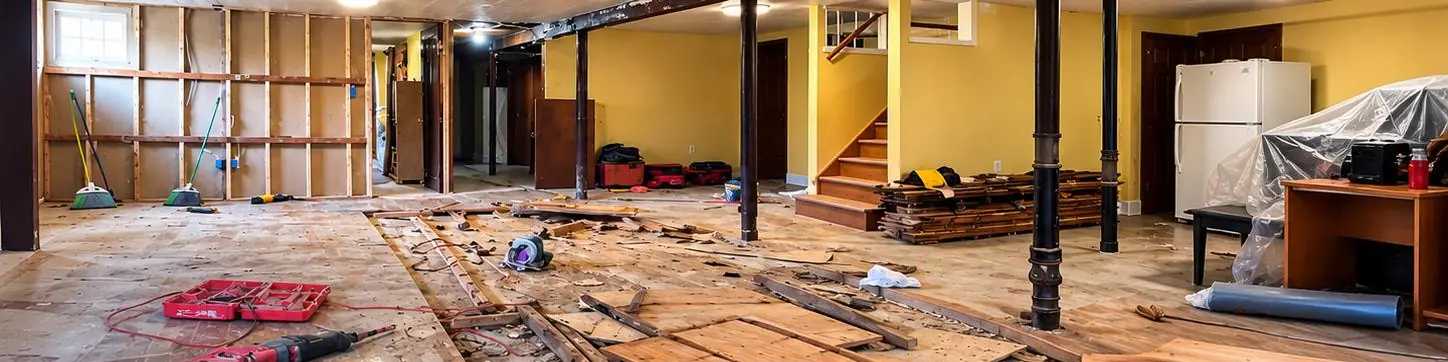
Basements in Massachusetts collect decades of life. Old furniture from a parent's house, paint cans from three renovations ago, a treadmill nobody uses and boxes nobody has opened since they moved in. When it is finally time to clear it out, the job can feel so big that it never starts.
This guide breaks a basement cleanout into clear steps, with the details that matter here in Greater Boston: state rules on what cannot go in the trash, how to handle hazardous leftovers, and how weather affects the job. Whether you do it yourself over a few weekends or hand it to a crew, this is the order that works.
Step 1: Set a goal and a deadline
Decide what the basement will be when you are done. A clean storage area, a playroom, a space ready for a contractor, or an empty basement for a home sale all lead to different decisions about what stays. Then pick a date. Cleanouts without a deadline tend to stall halfway, with sorted piles sitting for months.
If you are clearing a basement before selling, before a move or after a family member passes, give yourself more time than you think. Emotional items slow people down, and that is normal.
Step 2: Gear up and check for hazards
Before you lift anything, look around. Signs of mold, standing water, droppings from mice, or crumbling pipe insulation are reasons to slow down. In older Massachusetts homes, wrapped pipes and some old floor tiles can contain asbestos, and those should not be disturbed by a homeowner. If you are unsure, get it checked by a qualified professional first.
For normal clutter, wear work gloves, closed shoes and a dust mask, and keep the area ventilated. Bring good lighting, a utility knife, contractor bags, a dolly and plenty of boxes or bins. Clear a path from the basement door to the outside so you are not climbing over piles while carrying heavy items.
Step 3: Sort into five clear categories
Work one section at a time, starting nearest the stairs. Every item goes into one of five groups: keep, donate or sell, recycle, trash, and special disposal. Label areas of the floor or use colored tape so piles do not blend together.
Be honest with the keep pile. If you have not used something in two years and it is not truly sentimental, it probably belongs in donate. For family keepsakes, set aside one bin per person and ask them to choose what fits. A quick photo of an item can preserve the memory without keeping the object.
Step 4: Know what cannot go in the trash in Massachusetts
This is where many cleanouts get stuck. Massachusetts has waste disposal bans that keep certain items out of regular trash. Mattresses and box springs, textiles such as clothing and linens, large appliances, and older TVs and computer monitors are among the items covered. Rules and programs change, so check MassDEP and your city or town website for current details before you plan.
Leftover paint, solvents, pesticides, pool chemicals, propane tanks and car batteries need special handling too. Many communities hold household hazardous waste collection days, and latex paint is handled differently from oil based paint in many towns. Your city or town website will list what is accepted and when.
For bulky furniture and appliances, many municipalities offer curbside pickup by appointment, sometimes with a fee or sticker. Good condition furniture, tools and household goods can go to local charities, buy nothing groups or resale shops.
Step 5: Haul it out in the right order
Move items out in this order: donations first, so they do not get thrown away by mistake, then recycling, then trash and bulky pickup, and finally special disposal. Schedule donation pickups and city appointments in advance, since spring and early fall are busy.
Mind the weather. In winter, icy bulkhead stairs and driveways make carrying heavy items risky, and a wet spring day can soak cardboard before it reaches the curb. Many families find late spring through early fall the easiest window, though a basement cleanout can be done any time of year with care.
Step 6: Clean, dry and inspect the empty space
Once the basement is empty, you have a rare chance to see the floor and walls. Sweep and vacuum thoroughly, wipe down shelves and surfaces, and wash the floor. Look closely at the base of the foundation walls for water stains, efflorescence (white, chalky residue) or cracks. Check that the sump pump runs, if you have one, and that dryer vents and window wells are clear.
If humidity is high, start a dehumidifier now, before anything goes back in. Then set up shelving and bins so what you kept has a clear home. Our guide to basement storage ideas after a cleanout covers that part in detail.
When it makes sense to hire a cleanout crew
A DIY cleanout is very doable for a moderately full basement and a free weekend or two. It makes more sense to call a crew when the basement is packed wall to wall, when there are heavy items like old appliances or pianos, when nobody in the house can safely carry loads up the stairs, or when you are on a deadline for a sale or a move.
JM Cleaning and Services has a heavy services crew that combines basement cleanout, cleaning and organizing with junk removal, so one team handles the hauling and leaves the space clean. Carlos Motta and his family bring more than 20 years of experience, and the crew speaks English, Portuguese and Spanish. Text 2 or 3 photos to (978) 227-7632 by text or WhatsApp for a fast, free quote. Hours are Monday through Saturday, 8am to 5pm.
Frequently asked questions
01How long does it take to clear out a basement?
A lightly cluttered basement can often be cleared in a day by homeowners. A full basement with years of stored items commonly takes two to four weekends DIY, while a professional crew can usually finish in a day or less depending on volume and access.
02Can I throw a mattress in the trash in Massachusetts?
Generally no. Massachusetts added mattresses and textiles to its waste disposal bans, so they must be recycled or handled through an approved program. Check your city or town website for local mattress pickup or drop off options.
03What do I do with old paint and chemicals from the basement?
Bring hazardous items like oil based paint, solvents, pesticides and pool chemicals to your community's household hazardous waste collection. Many towns handle latex paint differently, so check your local rules before disposing.
04Should I clean the basement after clearing it out?
Yes. An empty basement is the best time to sweep, vacuum, wash the floor, wipe surfaces and inspect walls for moisture or cracks. Starting a dehumidifier before putting items back helps prevent musty smells and mold.
05Is it cheaper to rent a dumpster or hire a junk removal crew?
It depends on volume and your time. A dumpster can make sense for large renovation debris if you can do all the loading, but it may require a permit on a street. A junk removal crew does the lifting and sorting, which often costs similar for a basement sized job.
06Does JM Cleaning and Services do basement cleanouts?
Yes. The heavy services crew clears, cleans and organizes basements across Greater Boston and removes the junk in the same visit. Text 2 or 3 photos to (978) 227-7632 for a free quote.
Related services
Serving
Found this helpful? Make us a preferred source on Google.