
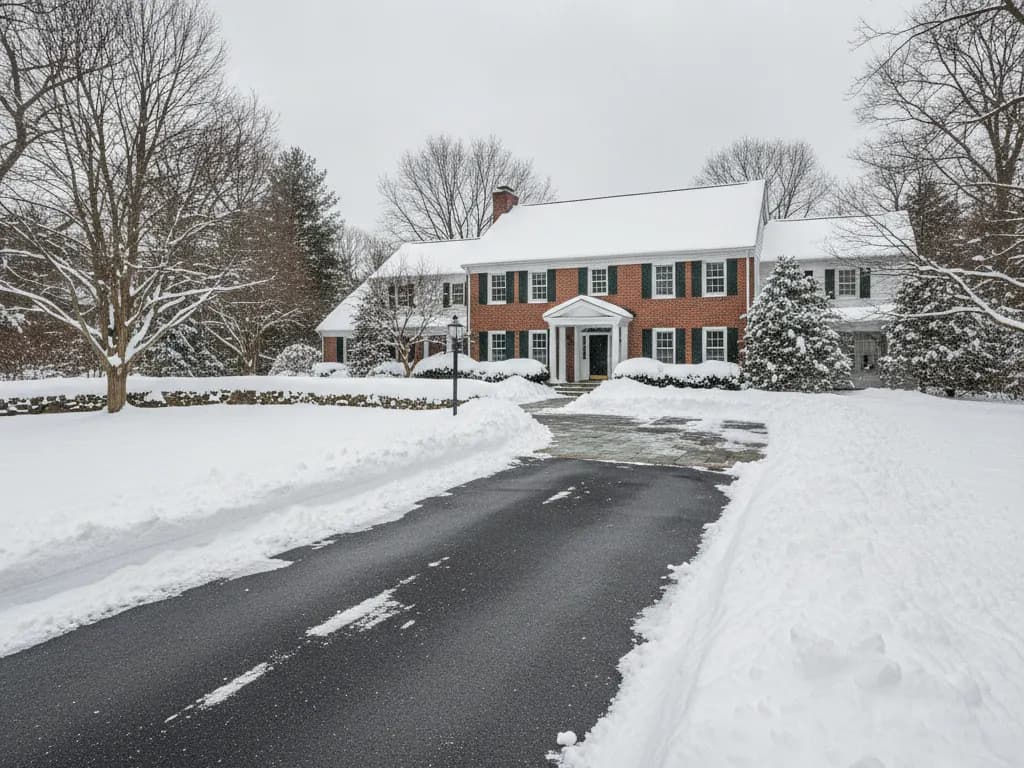
Greater Boston winters are unpredictable. Some seasons bring a few light dustings, and others bring back to back nor'easters that drop a foot or more at a time. In a typical season the Boston area sees somewhere around 40 to 50 inches of snow, and the hardest part for most homeowners is not the total but the timing: storms arrive overnight, on weekdays, or while you are away.
This guide explains how residential snow removal usually works, what gets cleared, what local sidewalk rules generally expect, how to think about timing, and the typical price ranges in the market. If you want a quote for your own property, text 2 or 3 photos of your driveway, walks, and steps to (978) 227-7632.
What residential snow removal covers
For most homes, snow removal means clearing the paths people actually use: the driveway or parking spot, the front walk, the steps and porch, the path to the back door, and the public sidewalk in front of the property. Many homeowners also want a path to trash barrels, a clear area around the mailbox, and fire hydrants or vents dug out.
Shoveling by hand and with snow blowers is the most precise option for walkways, stairs, porches, and tight city lots where a plow truck cannot fit. Plowing is fast for long, wide driveways, but it leaves walks and steps untouched, so many properties need both. If you live in a triple decker in Somerville or a narrow Cambridge lot, hand shoveling is often the only practical choice.
Sidewalk rules around Boston
Most cities and towns in Greater Boston expect property owners to clear the public sidewalk in front of their home or building within a set time after a storm ends. Boston, for example, sets a short deadline after the snow stops and can issue fines when sidewalks are left unshoveled. Other communities set their own deadlines and rules about corner ramps and hydrants.
Because the details differ from one place to the next and can change, check your city or town website for the current requirement before the season starts. Landlords and owners of multi family homes should pay special attention, since tenants may assume the owner handles the sidewalk. A scheduled snow removal service takes that question off the table.
Timing: during the storm or after it?
For storms under about six inches, a single visit after the snow stops is usually enough. For bigger storms, clearing once partway through and again at the end keeps the snow manageable and prevents it from packing into ice under foot traffic. Heavy, wet snow is common in coastal storms, and it is much harder to move once it has been driven over or refrozen.
Remember the plow ridge. When the city plows your street, it often pushes a wall of dense snow back across the end of the driveway, sometimes hours after you shoveled. Ask any service whether a return visit for the plow ridge is included or billed separately. Clearing snow and treating walks with ice melt before the evening freeze also helps prevent the slips and falls that make winter dangerous for older family members and visitors.
Typical snow removal costs in Greater Boston
As a rough guide, per visit shoveling for a typical home's walks, steps, and a small driveway often falls somewhere between $50 and $150 in the Boston area, depending on the amount of snow and the size of the area. Larger driveways, long walks, and storms with more than a foot of snow usually cost more. Ice melt application is sometimes included and sometimes added as a small extra.
Some homeowners prefer a seasonal contract, which in the local market commonly ranges from several hundred dollars to over $1,000 depending on property size and how the contract defines a storm. Seasonal pricing gives budget certainty, while per visit pricing can be cheaper in a light winter. Read the details carefully: how many inches trigger a visit, whether the sidewalk is included, and how a long multi day storm is billed. These are market ranges only, so request a free quote for your property.
Shoveling it yourself vs hiring help
Shoveling is harder on the body than many people expect. Wet snow can weigh several pounds per shovelful, and doctors regularly warn that heavy shoveling in cold weather strains the heart, especially for older adults or anyone with heart conditions. Back injuries and falls on hidden ice are common too.
Hiring help makes the most sense if you travel for work, have an early commute, own a rental property, care for an older parent's home, or simply do not want to be outside at 6am with a shovel. Doing it yourself still works well for small properties and light storms, as long as you pace yourself, lift with your legs, and push snow rather than throwing it.
How to set up snow removal before the first storm
Do not wait for the first forecast. Crews plan their routes early in the season, and the first big storm is the worst time to start making calls. Set it up in November or early December, and mark anything that could be damaged under the snow: low walls, garden edging, landscape lights, and the edges of the driveway. Reflective stakes along the driveway help everyone see where the pavement ends.
To request a quote from JM Cleaning and Services, text or WhatsApp 2 or 3 photos of your driveway, walks, and steps along with your address to (978) 227-7632. Snow removal is handled by the heavy services crew, the same team that does fall yard cleanups, gutter cleaning, and power washing, so you can line up your fall and winter work with one call. Questions are answered in English, Portuguese, or Spanish.
Frequently asked questions
01How much does residential snow removal cost near Boston?
As a rough market guide, per visit shoveling for a typical home's walks, steps, and small driveway often costs between $50 and $150, depending on snow depth and the area cleared. Seasonal contracts commonly range from several hundred dollars to over $1,000. A free quote based on photos gives the real number for your property.
02Do I have to shovel the sidewalk in front of my house?
In most Greater Boston communities, yes. Cities and towns generally require property owners to clear the public sidewalk within a set time after a storm, and some issue fines. Rules vary, so check your city or town website for the current deadline.
03Is shoveling or plowing better for my home?
Shoveling is better for walkways, steps, porches, and tight city lots. Plowing is faster for long, wide driveways but does not clear walks or stairs. Many suburban homes need both, while dense city properties usually need hand shoveling.
04When should snow be cleared during a big storm?
For storms over about six inches, clearing once partway through and again after the snow stops keeps snow from packing into ice. For smaller storms, one visit after the snow ends is usually enough. Clearing before the evening freeze reduces ice.
05What about the snow the city plow leaves at my driveway?
The plow ridge often arrives after the driveway has been cleared. Ask your snow removal service whether a return visit for the plow ridge is included or billed separately, so there are no surprises.
06How do I get a snow removal quote from JM Cleaning and Services?
Text or WhatsApp 2 or 3 photos of your driveway, walks, and steps plus your address to (978) 227-7632. The quote is free, and the office is available Monday through Saturday, 8am to 5pm, in English, Portuguese, and Spanish.
Related services
Serving
Found this helpful? Make us a preferred source on Google.